What is a Log Conditioning Chamber?

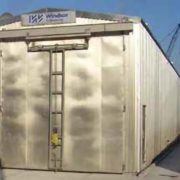
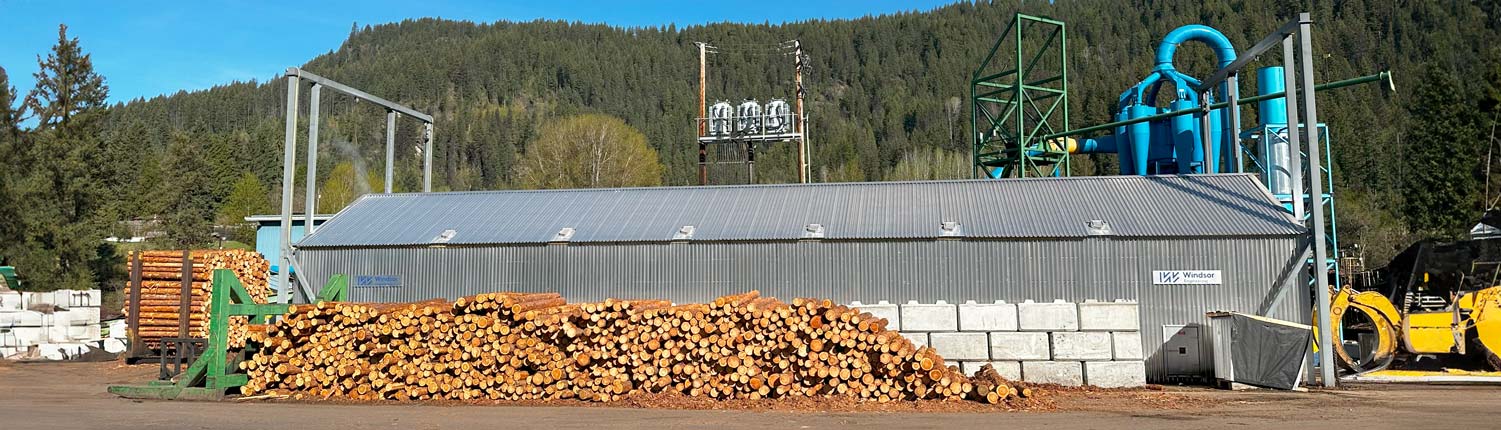
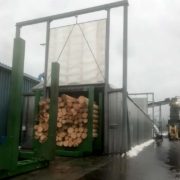
A log conditioning chamber is an enclosed chamber that uses low-pressure saturated steam to efficiently heat/condition logs prior to peeling or slicing.

How does it work?

The Log Conditioning chamber contains a steam generator bath that can be heated directly or indirectly. The steam produced by the generator fills the chamber, condenses on the logs, and transfers heat to them, creating a convection cell within. The cooled condensate falls to the sloped floor of the chamber and enters a series of trenches before going to the external sump. From there, it is pumped back into the steaming bath to be turned back into steam.

Why use one?

Steaming the logs before peeling them is a cost-effective method to warm and soften them. This results in improved product quality, reduced glue usage, and decreased wear and tear on the peeling knives. Ultimately, this helps to lower maintenance costs and downtime. Compared to other methods like water baths, steaming has additional benefits, such as reducing the environmental impact by using less processed water and minimizing the presence of grit and contaminants that can damage peeler knives or blades.
Benefits Over Log Baths

  • Reduced capital and running costs
  • Provides a semi-continuous supply of logs to the peeler or slicer
  • No water staining on the logs
  • Less waste water / Reduced environmental impact
  • Improved thermal efficiency
  • Conditioned logs are free from grit and contaminants which damage peeler knives/blades.
  • Reduced H&S requirements for operation.

The Process:

Each custom Log Conditioning Chamber (LCC) is designed to meet the requirements of each facility.

Conditions in the chamber are controlled with low-pressure saturated steam to ensure all logs are heated uniformly and kept wet.

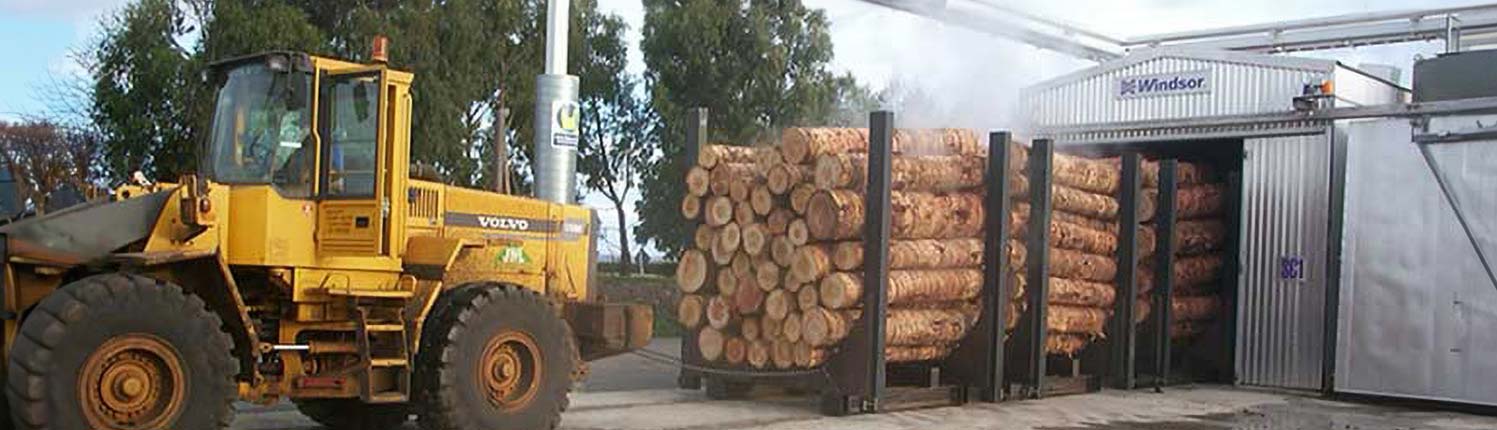
Approximately 6-9 ‘log carts’ will fit inside each Log Conditioning Chamber.

These log carts can be heated in one of two ways:

Batch:

The chamber is filled with logs, the doors are closed, and this batch of logs is conditioned until the required temperatures are reached. Then, the doors are opened, and all logs are removed.

Progressive:

Operation starts similar to the batch process, but when the doors are opened, only 1-2 log carts are removed from the outfeed end. 1-2 fresh carts are pushed in from the in-feed end, and the doors are closed.

The conditioning process will then continue. This allows the chamber to match site throughputs better, ensuring logs are at the correct temperature when they are processed.

Environmentally Friendly

Condensate from the conditioning process is captured through a series of canals and trenches to an outside sump, where it is pumped back into the chamber for reuse.

Process water can be reused for many cycles before needing to be replaced.

The overall volume of process water in the log chamber during operation is approximately 10m3.

This reduces the amount of wastewater produced by conditioning the logs over more traditional systems, reducing the environmental impact of the system.

OPTION: Heating System:

KDS Windsor log chambers can be designed to work with any heat source available on-site.

This could be steam, hot water, or hot oil.

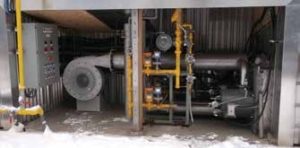
If there is no heat plant on site, then the chamber can also have a self-contained gas or diesel heating system.

OPTION: Automated Doors

Our standard doors are manually operated. They use a hydraulic ram to assist in raising and lowering the door. The door is then manually pushed left or right along a rail to clear the door opening (below). If site safety requires an automated system, then we also have our vertical door option (left). This can be remotely raised and lowered from the safety of the log loader cabin.

OPTION: Sprinkler System

A sprinkler line can be added to the log chamber for additional humidity. With coarse sprinkler heads and a wedge-wire rotary filter, recycled process water can be used through the sprinkler system, so no additional water is needed.